Blog
Mobility Bathrooms Explained: A Guide to Creating an Accessible Bathroom
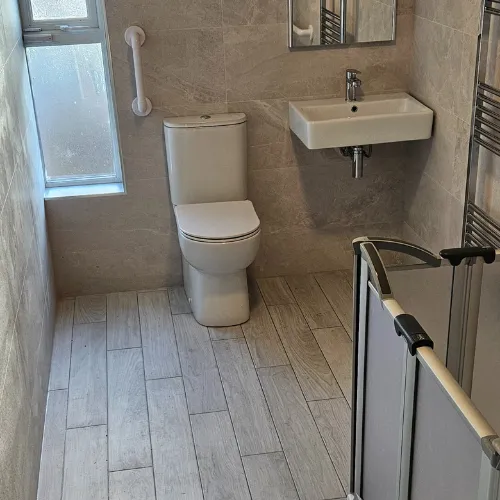
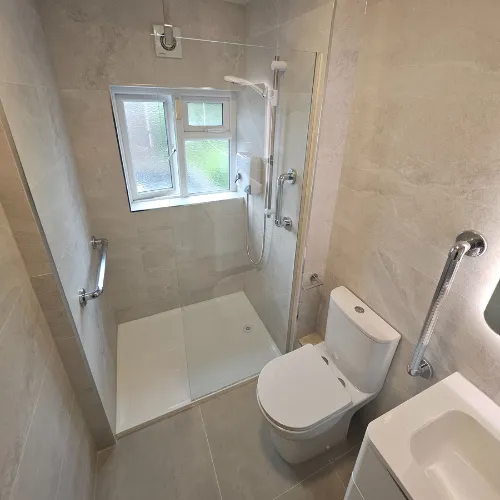
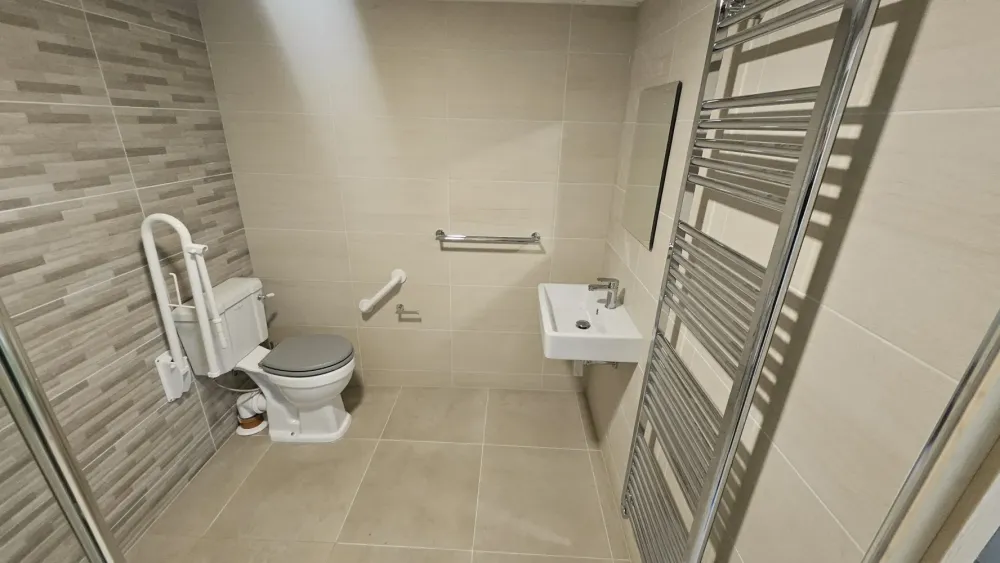
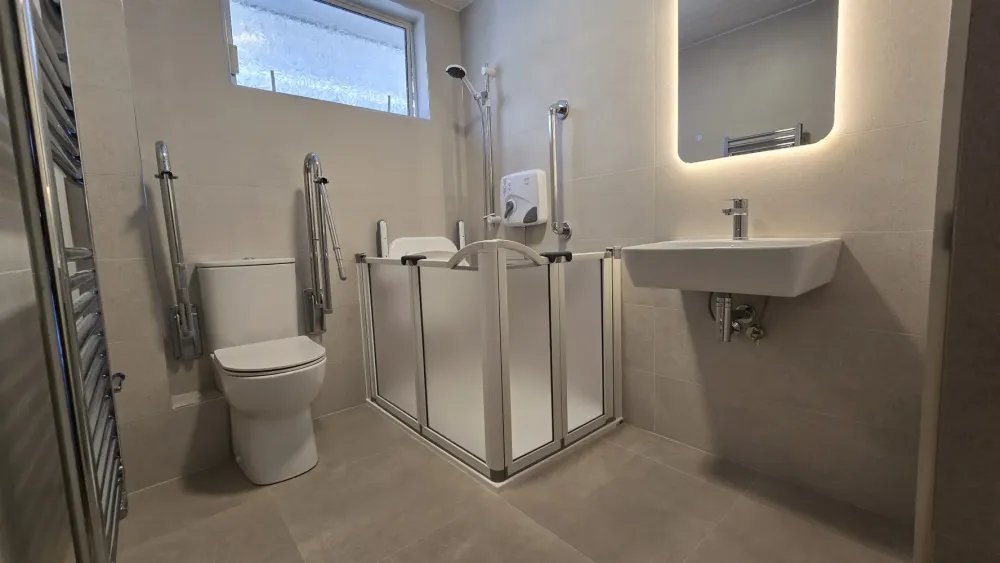 Everyone deserves a little bit of luxury, a place that is accessible and safe. A Mobility Bathroom is a modified space that gives users independence and comfort. When it comes to designing a Mobility Bathroom it really depends on what the user needs. Mobility Bathrooms should never feel old or clinical they can be just as modern and stylish as any other residential bathroom. With the right features in place, like a level shower area, shower seat, grab rails and wider doorway they can become a space that supports independence without compromising on style.
Products
A mobility bathroom requires several products to make it safe for its user. The main priority in a mobility bathroom is to make it anti slip. This is a big factor when it comes to tile choice as you need to ensure that you are choosing anti slip tiles. Glossy floor tiles can be a hazard for slips.
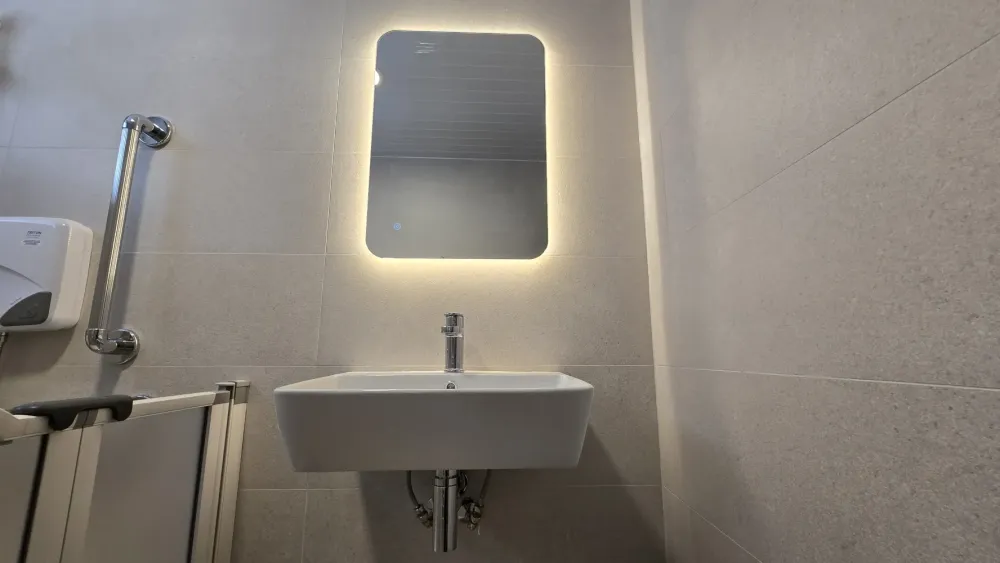
Our mobility bathrooms are thoughtfully designed to make daily routines easier, safer, and more comfortable without sacrificing style. The goal is to help individuals maintain their independence and dignity, while creating a space that’s genuinely enjoyable to use. Every detail is chosen with accessibility and ease of use in mind, making the bathroom a safer and more welcoming environment for everyone. Products that would enhance that are:
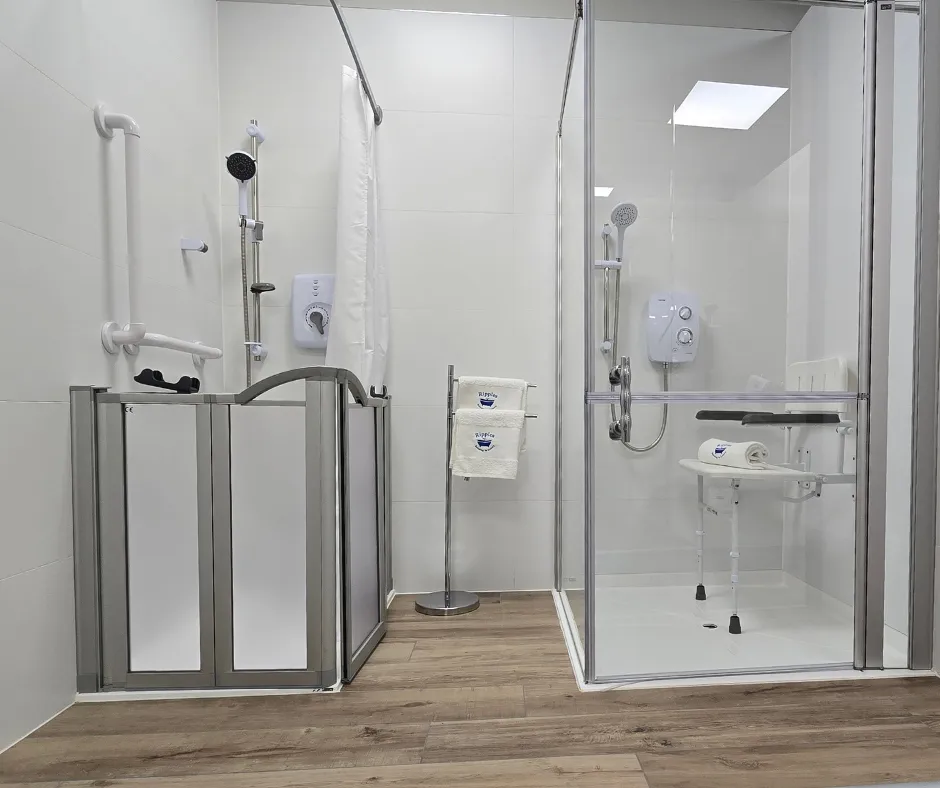
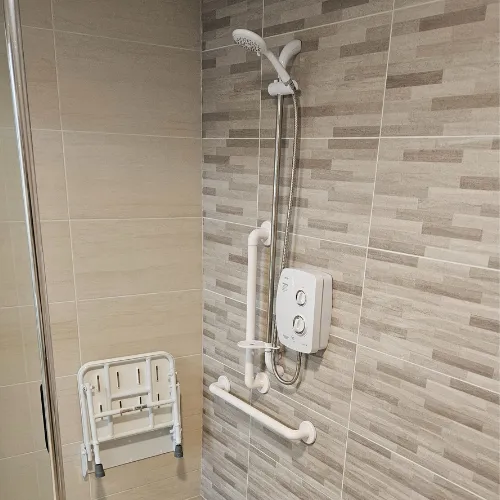
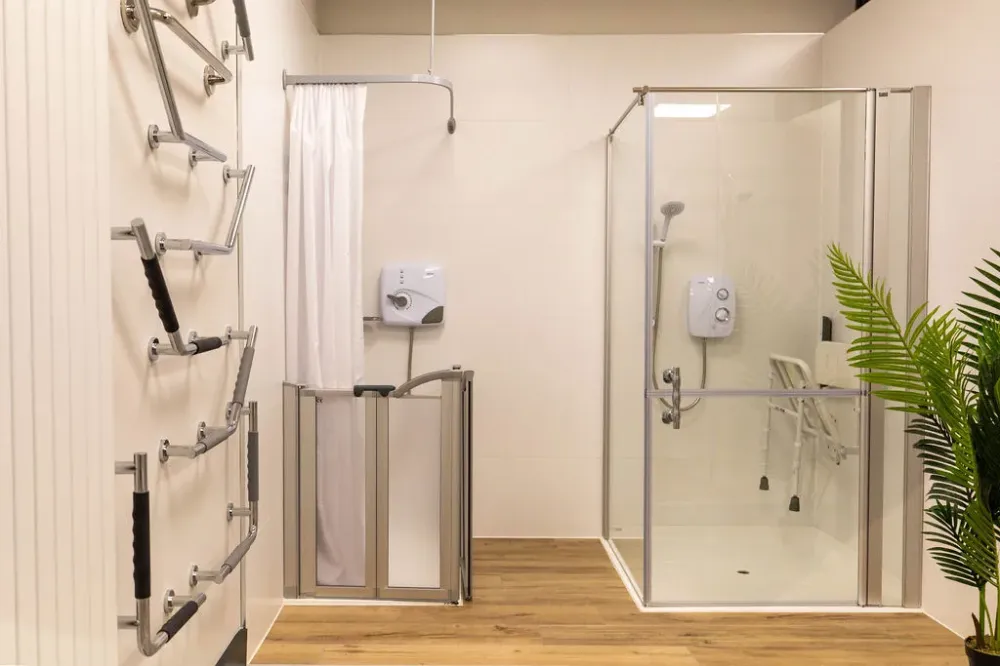
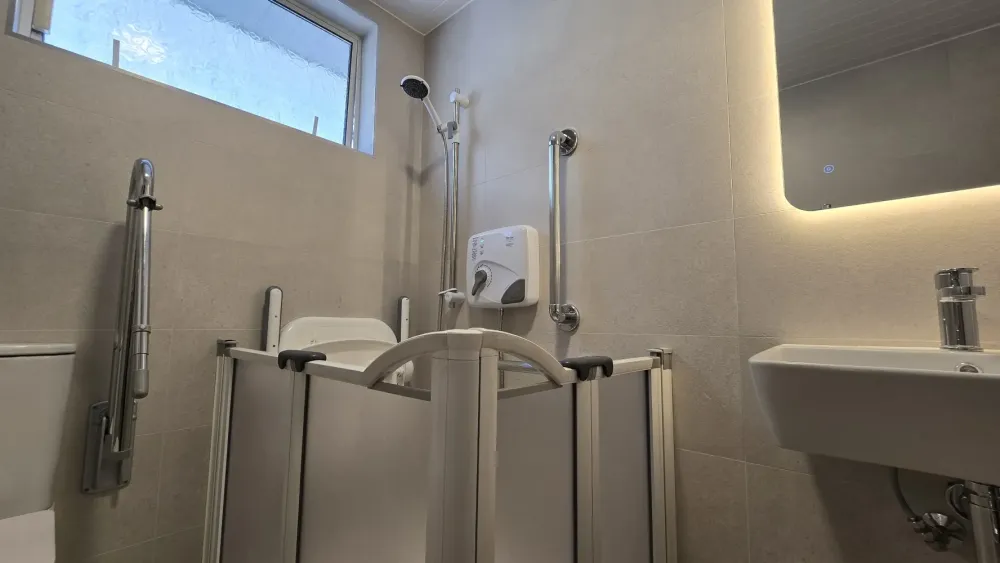
Level‑access shower units: Designed with low or level thresholds, walk-in showers allow for smooth, easy access—ideal for anyone who may have difficulty lifting their feet or using a traditional shower enclosure. The reduced step height significantly lowers the risk of trips or falls. These come with an anti-slip floor.
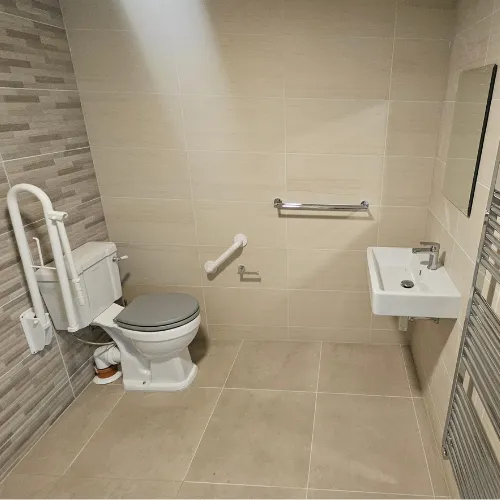
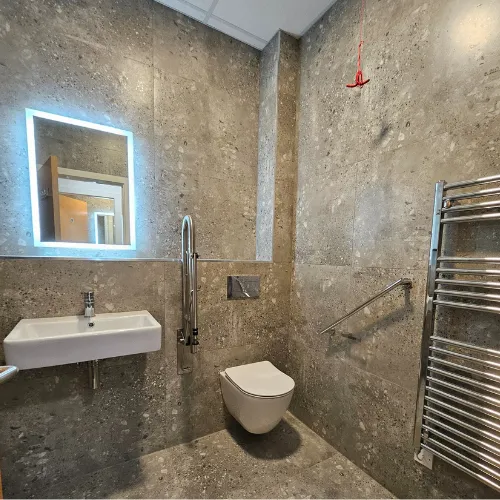
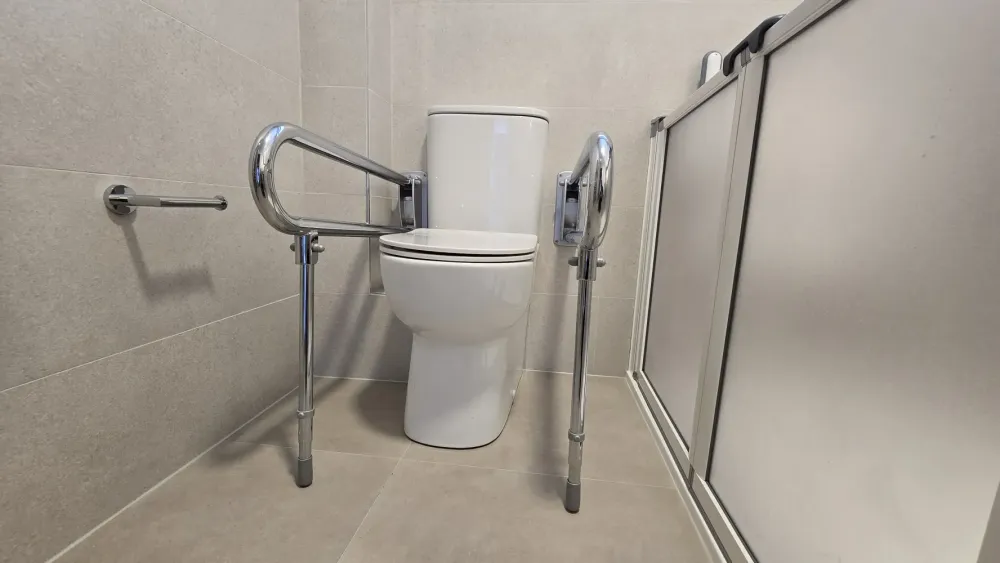
Grab Rails and Support Bars: Discreet yet sturdy, these are placed exactly where they’re most needed to offer support and reassurance. Whether it’s moving from the toilet to the basin or simply steadying yourself while showering, they provide added confidence with every movement. They are usually installed around the toilet, shower or bath area.
Non-Slip Flooring: Safety starts from the ground up. Slip resistant floor is a necessity in Mobility Bathrooms these provide secure footing even when wet, helping to prevent accidents and giving you peace of mind.
Accessible Basins and Toilets: Basins and toilets are positioned at a comfortable height to avoid over stretching. They are easy to use and gentle on the joints. Many options include additional features such as soft-close lids and lever taps for effortless control.
Shower Seats and Benches: Whether built-in or fold-away, shower seating provides a comfortable and supportive place to rest while bathing, making shower time safer and more relaxing—especially for those with limited mobility or balance issues. Bath lifts are also a helpful solution for those who wish to have a bath instead of a shower.
Grants
Like any home renovation project a new bathroom can be quite a substantial investment. When it comes to Mobility Bathrooms there is a number of grants available in Ireland that will help cover some of the costs.
Mobility Aids Grant 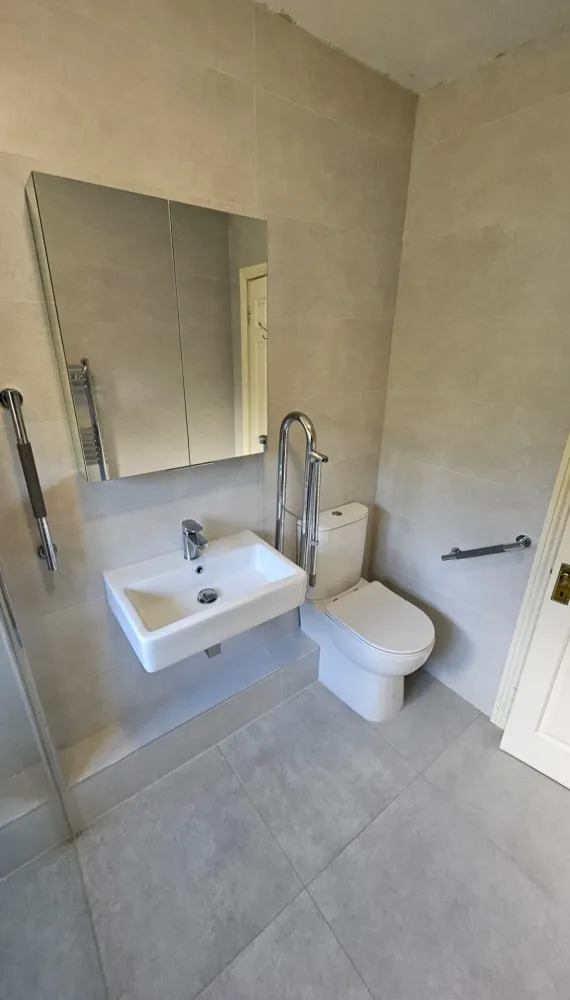
Adapting a bathroom for mobility needs can be a significant investment. To help ease the financial burden, there are various grants and assistance programs available in Ireland. One of the key resources is the Housing Adaptation Grant for People with a Disability. This grant assists in covering the costs of necessary adaptations to make your home more accessible.
The most popular grant for a Mobility Bathroom is The Mobility Aids Grant. This grant is provided by your local authority and is available to elderly and people with accessibility issues.
The purpose of this grant is to help people to pay for adaptions carried out in their home to make it more accessible for those with mobility issues including the bathroom. It covers items such as grab rails, accessible showers and tiles. Homeowners, tenants with their landlords permission and approved housing body residents can apply for the Mobility Aids Grant.
When it comes to the value the local authority will grant up to €8,000 for a mobility bathroom installation and is applicable to peoples who household income is lower than €37,500. This income assessment excludes any social welfare payments.
Alternative Grants
Other grants are available to those who do not meet the criteria of the Mobility Aids Grant. These are the Housing Adaption Grant For People With A Disability and The Housing Aid For Older People Grant.
The Housing Adaption Grant is for major adaptions to the home including accessible bathrooms. The value of the grant depend on the household earnings and will reduce accordingly. The maximum relief people can avail of from this grant is €40,000 if their household earnings are less than €75,000.
The Housing Aid for Older People Grant is available to people over the age of 66. The purpose of this is to carry out repairs to an elderly persons home to make it more liveable including a Mobility Bathroom. This grant covers up to €10,500 of the work carried out in the home.
Application Process
When it comes to applying for these grants there is a number of steps that needs to be carried out.
How to Apply:
- Contact Your Local Authority: Start by contacting your local county or city council to inquire about what grants are available to you.
- Assessment: An occupational therapist will need to visit your home to assess your needs and determine the necessary modifications. This assessment ensures that the adaptations are tailored to your specific requirements, a doctors letter can also be sufficient.
- Get Quotes: When applying for a grant from the local authority they require 3 quotes from certified bathroom installers to assist your application. Usually they will combine the 3 quotes and give the application an average of the
- Submit Your Application: Complete the application forms and submit them along with the quotes and assessment report to your local council.
- Approval and Work Commencement: Assessment and approval timings vary. This can take up to 9 months to be approved, especially for the Mobility Aids Grant. The locally authority may prioritize those who are terminally ill or are coming home from hospital. Once your application is approved, you can begin the modification work. The grant will cover the agreed-upon costs, ensuring you receive the necessary adaptations without financial stress. The work should start within 6 months of getting the grant approval.
- Completion & inspection: After the work is completed the local authority will inspect it and then give the final certification and pay the installer.
|
Grant Scheme |
Max Amount |
Covers VAT |
Income Limit |
Typical Wait Time |
|
Mobility Aids Grant |
€8,000 |
No |
Up to €37,500 |
6–9 months |
|
Housing Adaptation for Disability |
€40,000 |
No |
Up to €37,500–€75,000 |
Variable |
|
Housing Aid for Older People |
€10,700 |
 Yes (VAT incl.) |
Up to €60,000 |
2–3 months + inspection |
 Planning a mobility bathroom can feel overwhelming, but with the right support, it becomes a manageable and rewarding process. There are various design and accessibility options to consider, which is why involving specialists from the outset is so valuable. A good starting point is to contact your local council to enquire about available grants, as funding applications can take time. Beginning this step early can help avoid delays later on. With expert guidance, you can create a bathroom space that prioritises safety, comfort, and independence—tailored to meet your personal needs both now and in the future.